
Modern video games frequently push photorealistic graphics and high-octane battle royales, but a small pixel-art indie game created by a solo developer quietly revolutionized the gaming industry. Released in 2016 by Eric “ConcernedApe” Barone, Stardew Valley has transformed from a passion project into a cultural phenomenon, selling tens of millions of copies worldwide across PC, consoles, and mobile platforms.
If you are looking for a game that seamlessly blends farm management, dungeon crawling, social simulation, and relaxing gameplay loops, Stardew Valley remains the gold standard.
What is Stardew Valley? Game Premise and Lore
Stardew Valley begins with your character escaping the soul-crushing routine of working for the corporate giant, Joja Corporation. After unsealing an inheritance letter from your late grandfather, you leave the city to take over his overgrown, dilapidated farm plot in Pelican Town.
Your goal isn’t just to clear weeds and plant seeds; it’s to build a life. The game offers complete sandbox freedom. You can prioritize becoming an agricultural tycoon, exploring dangerous underground caverns, fishing in diverse biomes, or restoring the town’s dilapidated Community Center to drive Joja Corp out of town.
Alternatively, players can side with Joja Corporation for a purely financial, capitalist route through Pelican Town.
Core Gameplay Mechanics and Features
Stardew Valley operates on a 28-day seasonal cycle (Spring, Summer, Fall, and Winter). Each season features distinct crops, weather patterns, fish species, and village festivals.
1. Farming and Animal Husbandry
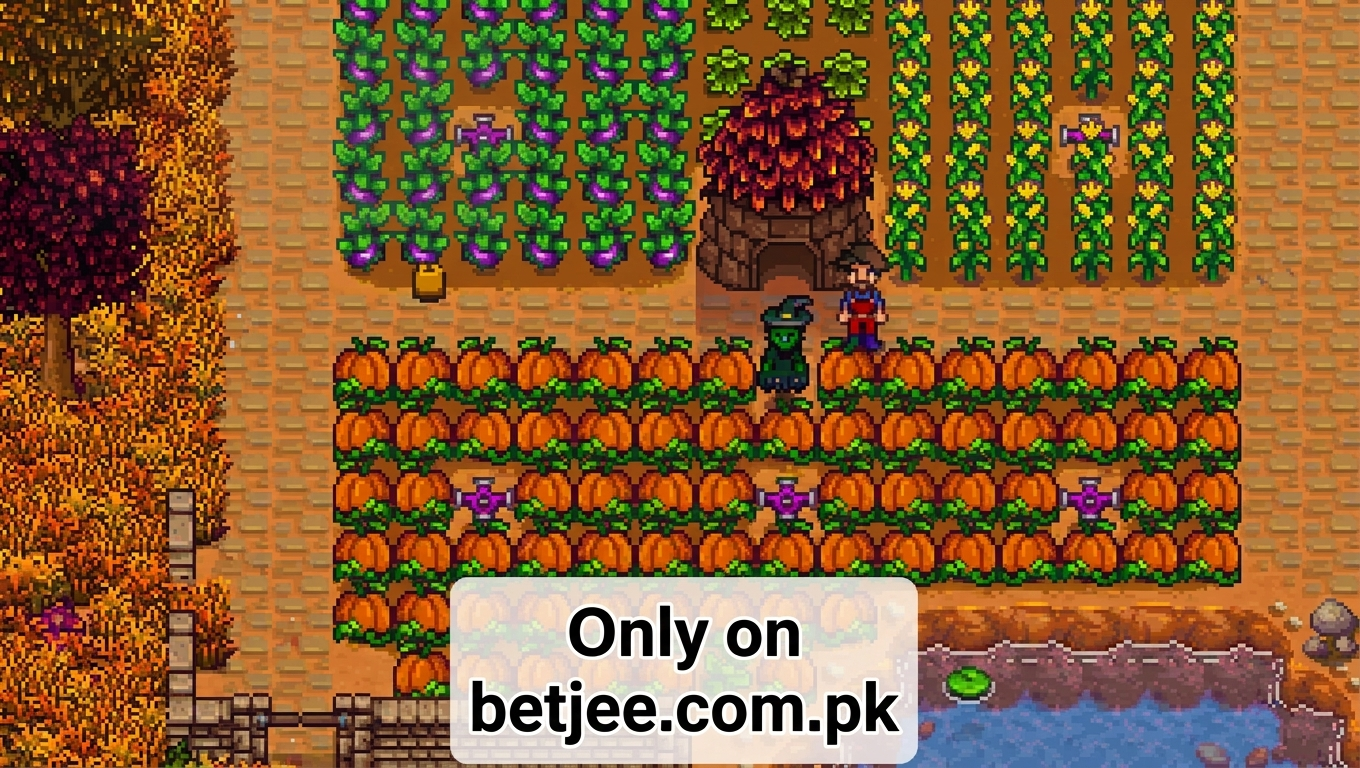
Clearing land with axes, pickaxes, and scythes reveals fertile soil where you can plant seasonal crops. Upgrading your tools unlocks efficient watering cans and sprinklers, letting you scale up operations. Beyond crops, you can build Coops and Barns to raise chickens, ducks, cows, goats, pigs, and ostriches, processing their yields into high-value artisanal goods like cheese, mayo, and truffles.
2. Mining and Combat
Pelican Town’s nearby Mines feature 120 procedurally generated floors packed with ores, gems, and hostile creatures. Combat utilizes simple real-time mechanics where timing weapon swings and managing your health/energy bars are vital. For end-game challenges, players can venture into the treacherous Skull Cavern or Volcano Dungeon.
3. Socializing, Romance, and Marriage
Pelican Town is inhabited by over 30 unique NPCs, each featuring dedicated daily schedules, backstories, and heart-based friendship meters.
- 12 Marriage Candidates: You can court and marry 12 bachelors and bachelorettes regardless of gender.
- Spouse Benefits: Married partners move into your farmhouse, help with chores, cook meals, and can start a family with you.
4. Skill Progression & Crafting
Every action levels up five main skill paths: Farming, Mining, Foraging, Fishing, and Combat. Leveling unlocks essential crafting recipes—such as Preserves Jars, Kegs, Bee Houses, and Crab Pots—allowing you to turn raw resources into profitable artisan products.
Stardew Valley 1.6 Update Features
The massive 1.6 Update expanded the game significantly, adding extensive free content across all platforms:
- Meadowlands Farm Type: A specialized farm layout featuring chewy blue grass that animals love, starting players off with a coop and two chickens.
- New Festivals & Events: Includes the 3-day Desert Festival, alongside two mini fishing events (Trout Derby and SquidFest).
- Mastery System: An end-game progression tree that grants powerful perks, specialized tools, and new craftables.
- New Items & Appliances: Introduction of the Dehydrator, Fish Smoker, Mushroom Log, and Big Chests.
- Multiple Pets & Accessories: Players can now adopt multiple pets, equip them with hats, and earn gifts from high-friendship animals.
Pros and Cons of Stardew Valley
Pros
- Unmatched Price-to-Value Ratio: Available for $15 (or $5 on mobile) with hundreds of hours of gameplay and zero paywalls or microtransactions.
- Relaxing Yet Engaging: Perfect balance between casual cozy vibes and deep, rewarding optimization loops.
- Cross-Platform & Co-Op: Play single-player or join up to 8-player online co-op across PC, console, and mobile.
- Thriving Modding Community: PC modding via SMAPI allows players to overhaul graphics, add new NPCs, or transform gameplay completely.
- Active Developer Support: Regular, massive content updates provided entirely free of charge.
Cons
- Strict Daily Energy & Time Limits: The 14-minute real-time day cycle can make time management feel stressful for beginners.
- Early Game Grind: Starting out with low stamina and basic tools can feel slow before sprinklers and upgrades are unlocked.
- Simple Combat System: Combat is basic compared to dedicated action RPGs.
- No Cross-Save / Cross-Play: Progress and multiplayer are restricted to the platform you purchase on.
System Requirements and Platform Compatibility
| Platform | Performance / Features | Best For |
| PC / Mac / Linux | Native Mod Support, 8-Player Co-op, First for Updates | Modders, Hardcore Players |
| Nintendo Switch | Portable play, physical controls, 4-Player Co-op | Casual gaming on the go |
| PlayStation / Xbox | Achievement support, smooth 4K TV performance | Couch co-op enthusiasts |
| iOS / Android | Touch controls, lower price tag, full single-player | Mobile gamers, commuters |
Frequently Asked Questions (FAQs)
1. Is Stardew Valley multiplayer?
Yes! Stardew Valley supports up to 8-player co-op on PC, and up to 4-player co-op on console versions. Players can share a farm, split income, and build cabins together.
2. Can you play Stardew Valley offline?
Yes, single-player mode is entirely playable offline on all platforms without needing an internet connection.
3. What is the best crop for making money in Stardew Valley?
- Spring: Strawberries (bought at the Egg Festival).
- Summer: Blueberries and Starfruit (processed in Kegs for Wine).
- Fall: Cranberries and Ancient Fruit.
4. Is there an end to Stardew Valley?
No, Stardew Valley is open-ended. While Grandpa evaluates your farm at the start of Year 3, you can play indefinitely without time limits or forced game-over states.
Final Verdict (Is Stardew Valley Worth Playing?)
Stardew Valley is a masterpiece of indie game design. Whether you want a relaxing farm simulator or a strategy-heavy game focused on profit optimization, Pelican Town offers endless charm and replay value. It remains one of the most rewarding RPG experiences available on any modern platform.