
Introduction
When Codemasters released GRID Autosport, it marked a pivotal turning point for the franchise. After GRID 2 pivoted heavily toward arcade-style drifting and polarized hardcore motorsports enthusiasts, Codemasters sought redemption. GRID Autosport was developed as a direct response to community feedback—a triumphant return to authentic track racing that balanced approachable arcade accessibility with demanding simulation physics.
Years after its initial release, and following its conversion to iOS, Android, and Nintendo Switch by Feral Interactive, GRID Autosport remains a gold standard for cross-platform racing games. Below is an in-depth analysis of its mechanics, racing disciplines, graphics, and lasting impact on the genre.
Download GRID Autosport super exlusively on Betjee.com.pk.
The Core Philosophy: Bridge Between Arcade and Simulation
GRID Autosport operates in the “simcade” subgenre—a sweet spot that delivers realistic vehicle dynamics without requiring a multi-thousand-dollar racing rig to be enjoyable.
Unlike pure simulations like iRacing or Assetto Corsa, GRID Autosport does not force you to micro-manage fuel mixtures or tire pressure strategy to survive Turn 1. However, unlike arcade racers like Need for Speed, you cannot simply hold the throttle, slam into a wall, and ride the momentum. Precision braking, hitting the apex, and controlling throttle response on corner exits are essential to winning.
ACCESSIBILITY REALISM
Arcade Racing <——– [ GRID Autosport ] ——–> Full Sim
(Need for Speed) (Simcade Balance) (iRacing)
Exploring the 5 Racing Disciplines
The centerpiece of GRID Autosport is its structured career mode, split evenly across five distinct motorsports categories. Each discipline requires a completely different driving technique, vehicle setup, and tactical mindset.
┌─────────────────────────────────┐
│ GRID Autosport Disciplines │
└────────────────┬────────────────┘
│
┌──────────────┬─────────────┼──────────────┬──────────────┐
│ │ │ │ │
┌─────▼──────┐ ┌─────▼──────┐ ┌────▼─────┐ ┌──────▼─────┐ ┌──────▼─────┐
│ Touring │ │ Endurance │ │ Open- │ │ Tuner │ │ Street │
│ Cars │ │ Racing │ │ Wheel │ │ Events │ │ Circuits │
└────────────┘ └────────────┘ └──────────┘ └────────────┘ └────────────┘
1. Touring Cars
- The Style: Bumper-to-bumper, aggressive contact racing.
- Key Dynamics: Front-wheel and rear-wheel drive sedans fighting for position.
- Driving Strategy: Aggressive overtake maneuvers, late braking, and holding your ground against aggressive AI rivals.
2. Endurance Racing
- The Style: Night-time multi-class racing focused on longevity.
- Key Dynamics: Simulated tire degradation.
- Driving Strategy: Smooth steering inputs and controlled braking to preserve grip as the match clock counts down. Smooth driving yields consistent lap times, whereas aggressive slides ruin rubber compounding.
3. Open-Wheel
- The Style: High-downforce, high-speed single-seater racing.
- Key Dynamics: Lightweight cars, rapid acceleration, and extreme braking efficiency.
- Driving Strategy: Perfection along the racing line. Open-wheel cars are fragile; a single side-by-side collision can cause catastrophic suspension damage.
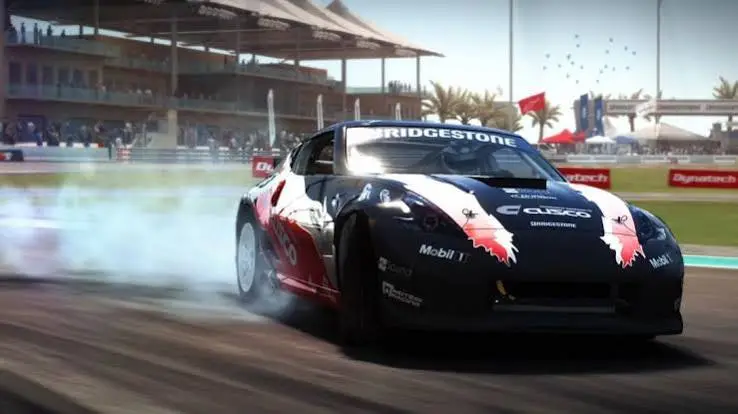
4. Tuner
- The Style: Drift events, Time Attacks, and Japanese muscle tuner showcases.
- Key Dynamics: High horsepower, rear-wheel power slides, and precise throttle control.
- Driving Strategy: Balancing oversteer and momentum to score maximum drift points or achieve blistering single-lap records.
5. Street Racing
- The Style: High-speed battles through tight urban layouts.
- Key Dynamics: Narrow tracks, sudden elevation changes, and unforgiving concrete barriers.
- Driving Strategy: Spatial awareness and precise turn-in points. One small mistake usually ends in a race-ending crash.
Key Gameplay Mechanics and Technical Highlights
Authentic Physics Engine
Codemasters refined the handling model to react dynamically to weight transfers, track kerbs, and surface changes. Each vehicle platform—from a lightweight Formula 3 car to a heavy Australian V8 Supercar—feels distinct.
Comprehensive Damage Model
Vehicle damage in GRID Autosport is more than aesthetic. Mechanical failures directly affect performance:
- Suspension Damage: Pulls the steering wheel to one side and ruins high-speed stability.
- Engine Wear: Reduces top-end speed and acceleration.
- Gearbox Misalignment: Causes gear slips and delayed upshifts.
+———————+—————————————————+
| Damage Type | Impact on Vehicle Performance |
+———————+—————————————————+
| Tires (Endurance) | Reduced cornering grip, longer braking distances |
| Suspension | Alignment pull, severe instability over kerbs |
| Engine/Exhaust | Loss of horsepower, reduced top speed |
| Bodywork/Aero | Drag increases, lost downforce at high speeds |
+———————+—————————————————+
Tactical AI Behavior
Unlike many racing games where computer-controlled drivers ride on a predetermined “rail,” the AI in GRID Autosport exhibits human-like traits. They defend lines, attack aggressively on straights, attempt ambitious dive-bombs, and occasionally make unforced mistakes under pressure.
The Rewind Feature (Flashbacks)
A staple of Codemasters titles, the Flashback system allows players to rewind time by a few seconds to rectify mistakes. While purists can disable this for higher XP bonuses, it serves as a forgiving learning tool for newer players.
Cross-Platform Performance: PC, Console, and Mobile
Ported to mobile devices and Nintendo Switch by Feral Interactive, GRID Autosport sets a benchmark for console-to-mobile ports:
- PC & Classic Consoles: The original PC version offers native high-framerate support, detailed lighting, dynamic smoke, and wheel support.
- Mobile (iOS & Android): Feral Interactive converted the full console title into a single package. With customizable touch, tilt, or gamepad controls, it stands out as a premium title without microtransactions.
- Nintendo Switch: Offers flexible performance modes (graphics vs. performance mode prioritizing 60 FPS) and supports Joy-Con tilt, analog inputs, and local wireless play.
Pros and Cons
Pros
- Balanced Handling: The simcade physics model provides rewarding, skill-based driving.
- Diverse Content: Five racing categories keep the career mode fresh.
- No Microtransactions: Premium experience where progression is earned through skill.
- Scalable Difficulty: Fully customizable assists, AI levels, and damage settings.
- Cross-Platform Consistency: Highly optimized performance across PC, mobile, and console.
Cons
- Simplified Cockpit View: Cockpit interiors feature blurred textures compared to competitor titles.
- No Mid-Race Pit Stops: Endurance races lack pit stop strategies despite tire wear mechanics.
- Repetitive Career Grid: Unlocking late-game events requires a grind across all disciplines.
Frequently Asked Questions (FAQs)
Is GRID Autosport an arcade racer or a simulator?
It is a simcade racer. It combines realistic physics, weight transfer, and damage models with accessible assist features and a rewind mechanic.
Can you play GRID Autosport with a steering wheel?
Yes. The PC and console versions feature native support for popular wheel setups from Logitech, Thrustmaster, and Fanatec. The mobile versions also support Bluetooth gamepads.
How does tire wear work in Endurance mode?
During Endurance races, your tires lose grip over time based on your driving style. Aggressive cornering and wheelspin accelerate rubber degradation, causing the car to slide late in the race.
Does GRID Autosport have offline single-player?
Yes. The game features an extensive offline career mode alongside custom cup races and offline split-screen modes on supported platforms.
Is GRID Autosport available on both Android and iOS?
Yes, GRID Autosport is available on both Android and iOS.
Is GRID Autoport free to download on both Android and iOS?
No, the full game is paid, however you can download the game only on Betjee.com.pk.
The Final Verdict
GRID Autosport remains a milestone achievement in motorsports gaming. By honoring the motorsport ethos and avoiding arcade gimmicks, Codemasters created a racing title with enduring replayability. Whether you are looking for a mobile racing game or an accessible PC track-day simulator, GRID Autosport stands out as a balanced, content-rich driving experience.